What does volatility mean in slots? (Canada 2026 guide)
Team Betty•7 mins read•
It's not about luck, it's about rhythm.
Some slots pay out small amounts regularly. Others go long stretches without a significant payout, then land something bigger. That pattern is designed and built into the game, and the stat that describes it is called volatility.
Once you understand it, you'll know what you're signing up for before you spin.
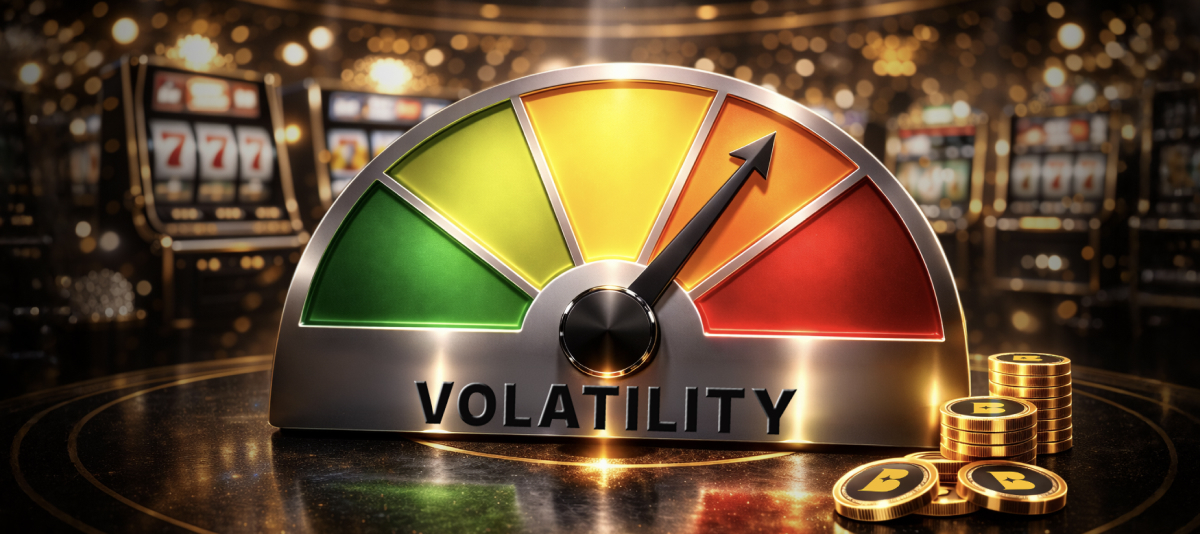
What does volatility mean in slots? It describes a game’s rhythm
Volatility describes how a slot distributes its payouts over time. Specifically, the relationship between how often a game pays and how significant those payouts tend to be.
Low volatility: pays out more frequently, typically in smaller amounts.
High volatility: pays out less frequently, with larger payouts when it does hit.
Medium volatility: moderate frequency, moderate payout size.
The right pick depends on how you like to play.
How does volatility feel when you’re playing?
A low volatility session feels relatively steady compared to the other volatility profiles. Small wins typically appear more often than a high volatility slot, and your balance moves without swinging dramatically.
A high volatility session involves more waiting. Long stretches without a notable payout, followed by moments where the game pays out more significantly. It rewards patience and is best with a bankroll that can absorb the quiet periods.
Medium volatility doesn’t lean hard in either direction, it’s less extreme and more balanced.
None of this predicts the outcome of any individual spin. Every spin is independently random. Volatility just sets the expected rhythm of a session.
What is slot volatility vs. slot variance?
They mean the same thing and are used interchangeably throughout the industry. “Variance” shows up more in older game documentation; “volatility” is the dominant term in modern reviews and player-facing content. Same concept, different era of terminology.
How do volatility and RTP compare?
RTP (Return to Player) is a percentage (typically 93–96% on modern slots) representing the theoretical return a game pays back over millions of spins. A 96% RTP slot theoretically returns $96 for every $100 wagered, long-term. Volatility tells you nothing about the amount returned, only the pattern of how it’s distributed.
A high volatility game and a low volatility game can have identical RTPs, but what changes is the distribution. High volatility concentrates returns into less frequent but larger payouts; low volatility spreads them across more frequent, smaller ones. RTP is about how much a game returns in theory, and volatility is about when and how it gets there.
A game with high volatility and a weak RTP is a tough combination. Medium volatility paired with a strong RTP is more balanced. It’s worth cross-referencing both specs before you play a game.
What are low volatility slots?
Low volatility slots have higher hit frequencies (spins more often return at least something) with smaller individual payout amounts and less balance variance across a session.
They suit players who want longer sessions on a fixed budget, or who prefer consistent activity over waiting on a bigger moment. A good fit if you’re testing a new game and don’t want your session derailed by a cold streak before you’ve got a feel for it.
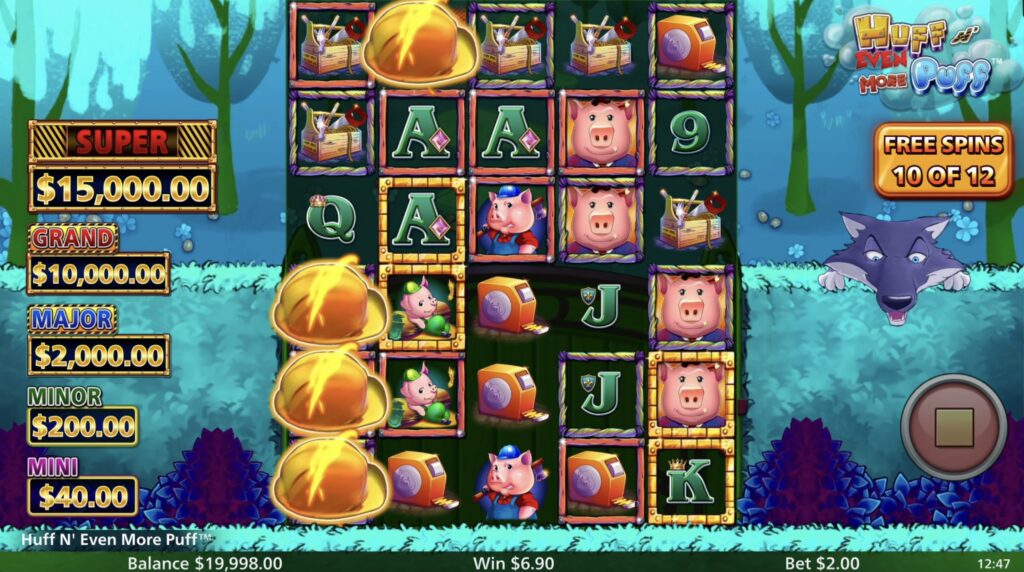
Three Little Pigs, casino edition. This Light & Wonder title runs on a 5×3 grid with 243 ways to win, built around a house-upgrading mechanic — straw to stick to brick — with Buzz Saw, Mega Hat, and Mansion features stacked on top.
At 94% RTP and low volatility, it’s a solid game with enough feature variety to stay interesting.
A screenshot from Huff N’ Even More Puff.
What are high volatility slots?
High volatility slots have lower hit frequencies with proportionally larger payouts when the game does engage. Balance swings can be significant, and extended dry spells are part of the design.
They require more bankroll runway. If you’re working with a tighter session budget, high volatility games will exhaust it faster. If you have the patience and the cushion, the payout structure can be fun.
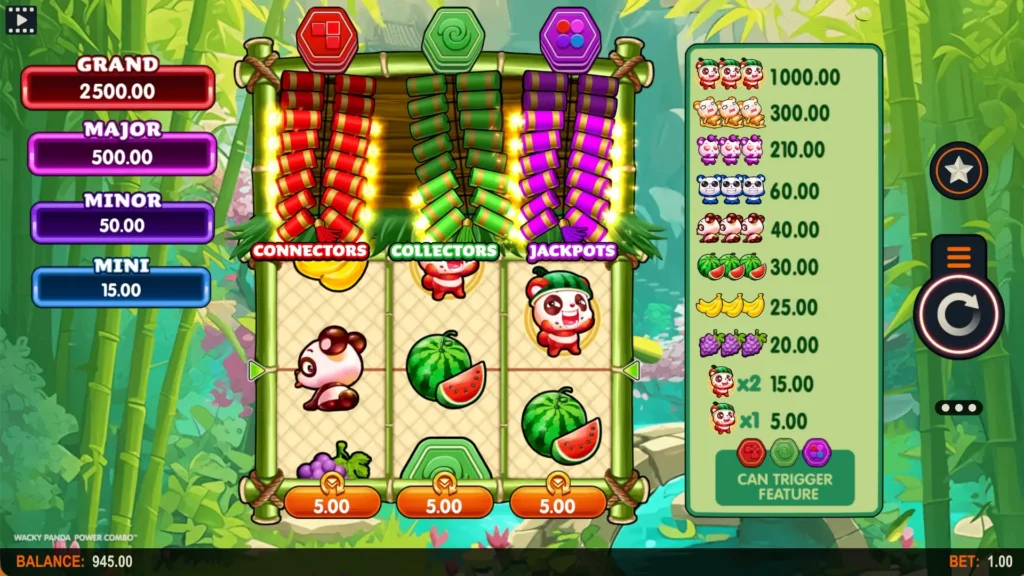
A 3-reel, single-payline game that’s deceptively simple until the Link&Win round hits. Trigger it with all three modifiers active and the game opens into a 5×5 grid with stacked potential — what Slingshot Studios calls the Power Combo.
The Hyperspins mechanic lets you respin individual reels at 5x your bet between triggers. RTP sits at 94%, solid for a high volatility game.
A screenshot from Wacky Panda Power Combo™.
What are medium volatility slots?
Medium volatility slots balance frequency and payout size without leaning hard in either direction. Hit rates are moderate, payouts aren’t dramatic, and sessions tend to feel active.
Many modern slot libraries fall in this range, which reflects where most players are comfortable. If you’re new to a game or unsure where to start, medium is a good entry point.
Looking for a medium volatility slot? Try Mega Tusk
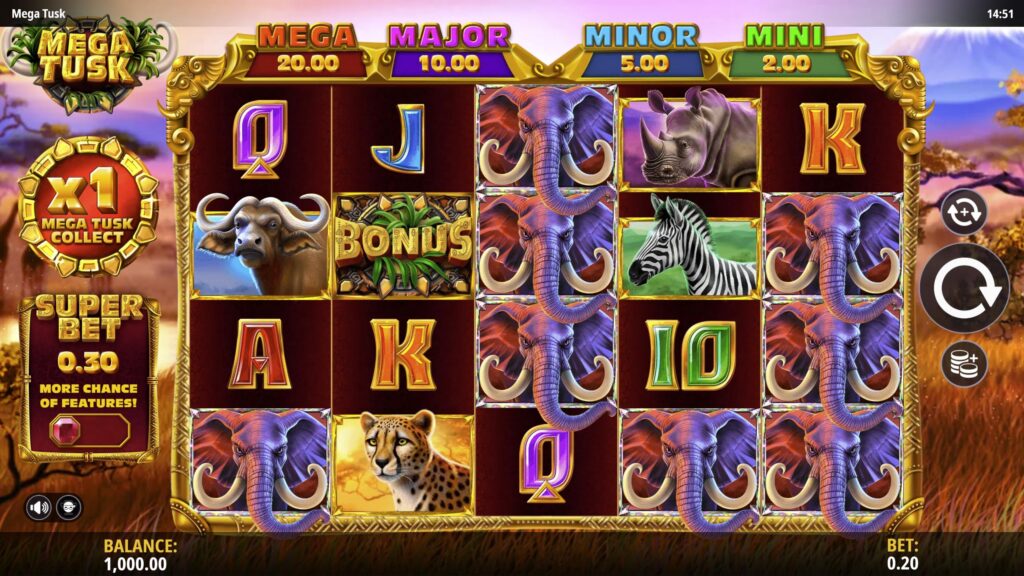
IGT’s safari slot uses a Cash Collect mechanic across a 5×4 grid — coin symbols land on the middle reels, get swept up by the Mega Tusk Wild on reels 1 and 5, and get boosted by multipliers before collection.
Four fixed jackpots are in play, and the Super Bet option increases your shot at the free spins round. At 94% RTP, it sits squarely in medium territory — active with less of a chance of dry spells compared to a high vol game.
A screenshot from Mega Tusk.
How to pick the right volatility for how you play
Match volatility to your bankroll first. High volatility slots need more runway. On a tighter session budget, low or medium volatility will stretch your play further.
Be honest about your tolerance for quiet spells. Long stretches without feedback are a feature of high volatility and should be expected. If that’s frustrating rather than suspenseful, it’s the wrong game for the session.
Then think about what you want from the experience. Active and engaged throughout? Low volatility. Willing to wait for a bigger moment? High. Somewhere in between? Medium.
Check the volatility before you load the game to avoid surprises.
Looking for a fast withdrawal casino in Ontario and Alberta? Betty is registered with iGaming Ontario; regulated play, verified game specs, and fast withdrawals.
Where to find a slot’s volatility rating
In-game info panel. Most modern slots include a paytable or info screen with volatility listed — sometimes as a label (low/medium/high), sometimes as a numeric scale (e.g., 1–5). Check there first.
The developer’s website. Studios like NetEnt, Pragmatic Play, and Play’n GO publish game specs on their official game pages, just search the title + studio name. Keep in mind that it can vary based on the casino you’re playing at, so check the casino’s website too.
Slot reviews. Volatility is a standard listed spec in any reputable review, alongside RTP and paylines.
The paytable itself. If no volatility label exists, read the paytable structure. A large gap between the top prize and the next-best payout signals higher volatility. Many small symbol tiers with close payout values signals lower volatility.
FAQs
Is volatility the same as how risky a slot is? No. Volatility describes how a slot distributes payouts across a session. All regulated slots use certified RNGs and every spin is independently random. Volatility shapes the pattern, not your odds on any given spin.
Can volatility change over time? No. It’s set by the developer and fixed. It doesn’t shift based on recent payout history or wagering volume on that game.
Do higher volatility slots have better RTPs? Not necessarily. Volatility and RTP are independent figures. A high volatility game can have an identical RTP to a low volatility one. The difference is how those returns are distributed, not the total theoretical return.
Which volatility is best for beginners? Medium or low. More feedback per session, less chance of a long cold streak burning through your budget before you’ve understood how the game plays.
How do I read a paytable to guess volatility if it isn’t listed? Look at the distance between the top payout and the next-best ones. A steep drop — massive top prize, very little in the middle tiers — suggests high volatility. A gradual scale with many mid-range combinations suggests lower volatility.