
Good luck charms from around the world
From clovers to cats, these are the stories behind lucky rituals.




Games of chance have always attracted good luck charms. Players tap the table, blow on dice, wear a lucky shirt, or keep a trinket nearby — gestures that feel like they might influence the outcome.
In reality, casino games run on certified random number generators, meaning every spin or deal is mathematically independent. No amount of “luck” you feel from an object will change that.
But the belief in luck itself is far older than casinos. Across cultures, people have held objects, performed rituals, and believed, just a little, that it made a difference. Here are a few of the most interesting.
The ritual before the roll
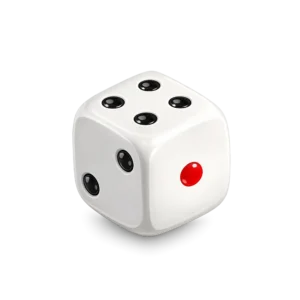
Blowing on dice is one of the most recognizable gambling rituals, and nowadays the gesture is supposed to send a little luck into the roll. Where it started is unclear, but some stories link it to early street gamblers who blew off dust, debris and dirt off the dice to get a fair roll.
It’s a tiny act of control in a game where players ultimately have none, and the habit stuck until it became part of the mythology of casino games. It’s still common to see players do it before sending the dice down the craps table.
The luck of the four-leaf clover
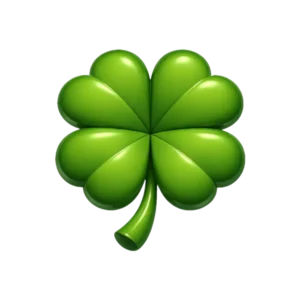
In Irish folklore, clovers were believed to offer protection from evil spirits. Over time, the symbolism shifted to the rarer four-leaf version. Your odds of finding one in a patch are often estimated between 1 in 5,000 and 10,000. Finding one doesn’t feel lucky because someone declared it so, it feels lucky because it’s already rare.
Despite every St. Patrick’s Day decoration, the four-leaf clover wasn’t the plant Saint Patrick used in his teachings. That was the ordinary three-leaf shamrock.
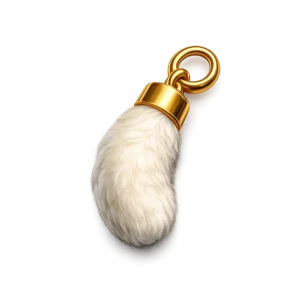
The rabbit’s foot was a gambler’s charm
The rabbit’s foot shows up in the written record in the late 1800s, found in a gambler’s toolkit. Its origins trace back to African American folklore, where the rabbit symbolised cleverness and evasion, and carried forward through Hoodoo, a folk magic tradition that evolved from African belief systems. The ritual rules were specific; left hind foot, captured in a cemetery, under a full moon (though some sources say the new moon), ideally on a Friday the 13th.
The logic was inversion; concentrate enough darkness into an object, and misfortune passes over you.
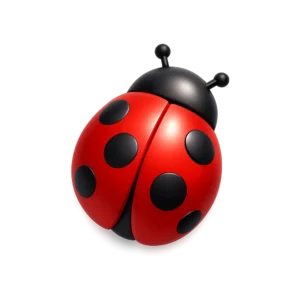
The ladybug earned its reputation
Medieval European farmers noticed that when ladybugs appeared, their crops survived. That’s not superstition though; ladybugs eat aphids, and aphids destroy harvests. The association between ladybugs and good fortune was built on observation before it became belief.
The modern ritual grew from there: if one lands on you, make a wish, release it gently, and watch which direction it flies. That’s where your luck is coming from.
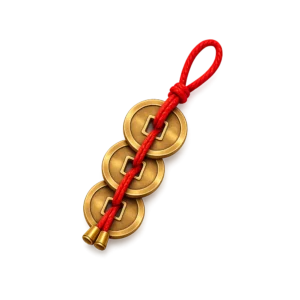
The lucky coins tied with red string are an engineered system
These traditional Chinese coins are round on the outside and square in the centre, reflecting the ancient idea of “round heaven, square earth.” In feng shui practice, coins are often tied together with red string, a colour associated with prosperity.
Three coins together are commonly interpreted as representing heaven, earth, and human luck in balance. The charm is often carried in a wallet or placed near money to attract prosperity.
Placement matters too; near a cash register, in the southeast corner of a room, or by a front door. Over centuries, these coins became part of a broader system of feng shui symbols designed to invite good fortune and financial stability.
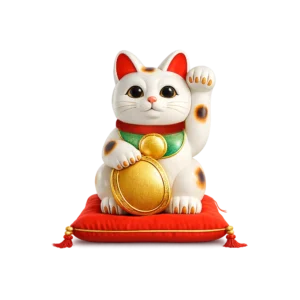
The Maneki-Neko is beckoning
In Japan, the gesture for inviting someone closer is made palm-down, fingers folding toward you. The raised paw means: come here.
One of the most famous legends traces the symbol to the 17th century at Tokyo’s Gōtoku-ji temple. According to the story, a feudal lord named Ii Naotaka was sheltering under a tree during a storm when a monk’s cat appeared to beckon him toward the temple. He stepped forward as lightning struck the tree behind him. With his life saved, he became a patron of the temple, and the beckoning cat became associated with good fortune.
Today the figurines follow their own system of meanings. A raised left paw is said to attract customers, while the right paw invites money.
The outcomes are random, the rituals are human
None of this changes what actually happens on the reels. But across four millennia and every corner of the planet, people have believed that the gestures mattered.
Play for fun. All games use certified RNGs. Please gamble responsibly.